Thursday, February 13, 2014

How to Rebuild/Recreate Concurrent Manager

How to Rebuild/Recreate Concurrent Manager


Applies to:
            Oracle Applications – Version: 11.5.10.2 and above

Description:
            After cloning, concurrent manager unable to start successfully at 0 status.

Solution:
            Check the following solution on test environment before implement on production environment, rebuild concurrent manager using following steps:

·         Stop concurrent manager and wait to clear all processes of FNDLIBR or kill the processes

·         select * from fnd_concurrent_processes where process_status_code='A';

·         update fnd_concurrent_processes set process_status_code='K' where process_status_code='A';

·         select * from fnd_concurrent_queues where control_code='N';

·         update fnd_concurrent_queues set control_code=null where control_code='N';

·         update fnd_concurrent_queues set node_name=null,node_name2=null
where concurrent_queue_name not like 'FNDSM%' and concurrent_queue_name not like 'FNDIM%'
and concurrent_queue_name not like 'APACHE%' and concurrent_queue_name not like 'FORMS%'
and concurrent_queue_name not like 'REPORTS%' and concurrent_queue_name not like 'MET_CL%'
and concurrent_queue_name not like 'MET_SRV%' and concurrent_queue_name not like 'OAMGCS%';

·         select * from fnd_concurrent_queues where concurrent_queue_name = 'FNDCRM';

·         update fnd_concurrent_queues set control_code = 'A'
where concurrent_queue_name = 'FNDCRM';

·         Update fnd_concurrent_queues set target_node = null;

·         select distinct phase_code, status_code from fnd_concurrent_requests;

·         update fnd_concurrent_requests set phase_code = 'C' , status_code = 'C' where phase_code != 'P';

·         Stop all middle tier services including the concurrent managers
·         Stop the database
·         Start the database

·         Connect SQLPLUS as APPS user and run the following :
o   EXEC FND_CONC_CLONE.SETUP_CLEAN;
o   COMMIT;
o   EXIT;

Steps to Clean Nonexistent Nodes or IP Addresses from FND_NODES
( Note : In the case of a clone instance, it is strongly recommended to clean the non - existing nodes )

·         Run AutoConfig on all tiers, firstly on the DB tier and then the APPS tiers and webtiers to repopulate the required system tables

Connect to SQLPLUS as APPS user and run the following statement :

·         select CONCURRENT_QUEUE_NAME from FND_CONCURRENT_QUEUES where CONCURRENT_QUEUE_NAME like 'FNDSM%';

If the above SQL does not returning any value then please do the following:

·         Go to $FND_TOP/patch/115/sql
·         Connect SQLPLUS as APPS user and run the following script :
·         SQL> @afdcm037.sql;

How to Create The Service Manager 'FNDSM' on Oracle Applications:
This script will create libraries for FNDSM and create managers for preexisting nodes.
Check again that FNDSM entries now exist:

·         select CONCURRENT_QUEUE_NAME from FND_CONCURRENT_QUEUES where CONCURRENT_QUEUE_NAME like 'FNDSM%';

·         Go to cd $FND_TOP/bin
·         adrelink.sh force=y "fnd FNDLIBR"
·         adrelink.sh force=y "fnd FNDSM"
·         adrelink.sh force=y "fnd FNDFS"
·         adrelink.sh force=y "fnd FNDCRM"

·         Run the CMCLEAN.SQL script from the referenced note below (don't forget to commit)

Note 134007.1 - CMCLEAN.SQL - Non Destructive Script to Clean Concurrent Manager Tables
·        
       Start the middle tier services including your concurrent manager
·         Retest the issue

Your comments, especially which will help us improve the functionality, will be greatly appreciated :)

Friday, February 15, 2013

Export from Oracle Application Form did not save

Export from Oracle Application not save


Currently uses:
Oracle Enterprise Linux 5.5
Database 11gR2
Oracle EBS Application R12
IE 8 Windows 7

Description:
I am facing the problem while exporting data from Oracle Application form, export file did not save or I did not found where it save:


Solution:

Solution is very simple, just hold CTRL key while export now you have the option to save the export file where you want and in desired format:


Your comments, especially which will help us improve the functionality, will be greatly appreciated :)


Comments by Rana Muhammad Junaid:
Enable download option in internet explorer tools-internet options-security for both internet and intranet. And disable popup blocker if it is on. This should resolve this issue permanently and should be able to download without ctrl key. 

Wednesday, January 16, 2013

FRM-92050 failed to connect to Server /forms/servlet -1 Applet / Forms not opening on IE8


FRM-92050 failed to connect to Server /forms/servlet -1 Applet / Forms not opening on IE8


Currently uses:
Oracle Enterprise Linux 5.5
Database 11gR2
Oracle EBS Application R12
IE 8 Windows 7


Description:

I am facing the problem to open applet form on IE 8:


Solution:

After some research work I found the following solution:

Confirm the IE version is greater or equal to 7:


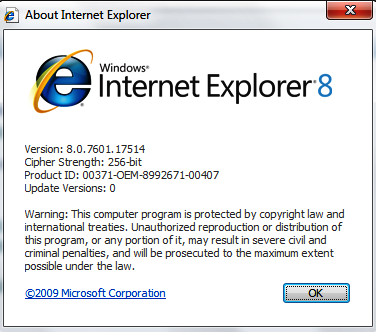
Go to About Internet Explorer:


Go to Tools --> Internet Options


Go to Security Tab and then on Custom Level


Scroll down using scroll bar and check Enable XSS filter value


Disable the Enable XSS filter 


Apply the changes and retest the issue. 


Your comments, especially which will help us improve the functionality, will be greatly appreciated :)


Wednesday, November 28, 2012

Unable to mount NTFS file system in oracle enterprise linux 5

Unable to mount NTFS file system in oracle enterprise linux 5

Applies to:

Oracle Enterprise Linux 5.5
Database 11gR2


Description:

I am using Oracle Enterprise Linux 5.5, I am trying to mount a NTFS file system USB drive on linux but unable to succeed and got the following error:

 mount -t ntfs /dev/sdb1 /media/usbdrive/
 mount: unknown filesystem type 'ntfs'


Solution:

After some research work I found that install the FUSE and NTFS-3G packages to resolve the issue.


To check the package installed or not:

rpm -qa |grep fuse

To install the packages execute the folloiwng:

rpm -ivh fuse-2.6.3-1.el4.rf.x86_64.rpm
rpm -ivh fuse-ntfs-3g-2010.5.22-1.el5.rf.x86_64.rpm

After successfull installation of packages I can mount the NTFS USB drive successfully:

mount -t ntfs-3g /dev/sdb1  /media/usbdrive/


Your comments, especially which will help us improve the functionality, will be greatly appreciated :)

Tuesday, October 30, 2012

sqlplus: error while loading shared libraries: libclntsh.so.11.1


sqlplus: error while loading shared libraries: cannot restore segment prot after reloc: Permission denied

Applies to:

Oracle Enterprise Linux 5.5
Database 11gR1

Description:

I am using Oracle Enterprise Linux 5.5 and install Oracle Database 11gR1. After successfull installation of OS and Database when I try to login database it give me the following error:


sqlplus / as sysdba
sqlplus: error while loading shared libraries: /d01/app/oracle/product/11.2.0/dbhome_1/lib/libclntsh.so.11.1: cannot restore segment port after reloc: Permission denied


Solution:

Reason of the above error because of SELinux is running in ENFORCING mode, Oracle development has recommended the following workaround while they correct the problem. To check the mode execute the following command from root user:


root> getenforce
Enforcing

Switch SELinux from the default “Enforcing” mode that it is running in, to the “Permissive” mode.

root> setenforce 0

Now check again:

root> getenforce
Permissive

This allows SELinux to continue running, and logging denial messages, but SELinux will not actually deny any operations. Once Development has resolved this issue, you can (and should) return SELinux to the default “Enforcing” mode

Now successfully connect to SQL:

 sqlplus / as sysdba

SQL*Plus: Release 11.2.0.1.0 Production on Tue Oct 30 11:56:08 2012

Copyright (c) 1982, 2009, Oracle.  All rights reserved.

Connected to an idle instance.

SQL> startup;
ORACLE instance started.

Total System Global Area 4275781632 bytes
Fixed Size                  2220200 bytes
Variable Size            1728057176 bytes
Database Buffers         2533359616 bytes
Redo Buffers               12144640 bytes
Database mounted.
Database opened.
SQL> 


Your comments, especially which will help us improve the functionality, will be greatly appreciated :)

Thursday, September 13, 2012

Requested URL/OA_HTML/AppsLogin was not found on this server


Requested URL/OA_HTML/AppsLogin was not found on this server

Applies to:

Oracle Enterprise Linux 5.5
Oracle Application Install - Version: 12.1.1
Database 11gR1

Description:

I recently came across a problem the login page was throwing an error - 404 /OA_HTML/AppsLogin was not found on this server. All services of Database and Listener working fine and get connected. All Application services started successfully without any error/warning on status 0, multiple time restart the services of application and database and also restart the whole machine but still facing the same problem.

Solution:


After some research work I have found the following solution:

The Problem occurs because the wsrp_service.wsdl was owned by root but the services were being started by applmgr.

Ensure that the permission of the file
$ORA_CONFIG_HOME/10.1.3/j2ee/oacore/application-deployments/oacore/html/server-wsdl/wsrp_service.wsdl

Shows that it is owned by root user. Somebody started the services of Apps as root user.
Changed the ownership of the file to Apps Owner.
Restart the service, everything working fine now.


Your comments, especially which will help us improve the functionality, will be greatly appreciated :)
Friday, September 7, 2012

APP-FND-01630, APP-FND-01662, cannot open .dbc file

APP-FND-01630, APP-FND-01662, cannot open .dbc file


Applies to:

I am using: 
Oracle Enterprise Linux 5.5
Oracle Application Install - Version: 11.5.10.0 and later
Database 11gR1

Description:

I recently came across a problem after creating repository for Enterprise Manager of 11g, and unable to login the oracle application, facing the following errors:


Solution:
Locate the .dbc file and issue read/write permissions on it:

cd $FND_SECURE

chmod 777 TEST.dbc


Your comments, especially which will help us improve the functionality, will be greatly appreciated :)

How to Extend Swap space on LVM Disk Linux

How to Extend Swap space on LVM Disk Linux   Applies to:             Oracle Database 12.2             Oracle Linux 7 Description: ...